
2025 9th International Conference on Mechanics, Mathematics and Applied Physics (ICMMAP 2025)
Speakers

Prof. Ahmedov Bobomurat
Uzbekistan Academy of Sciences, Uzbekistan
Biography:Professor Bobomurat AHMEDOV obtained his Ph.D. from the Tashkent Institute of Nuclear Physics in 1993 and was awarded the highest Doctor of Science degree (D.Sc.) in Physics and Mathematics from the National University of Uzbekistan (NUUz) in 2001. He is a full member of the Academy of Sciences of Uzbekistan and a fellow of the Third World Academy of Sciences. He is currently affiliated with the School of Astronomy and Theoretical Physics at Tashkent State University, Uzbekistan, and the Ulugh Beg Astronomical Institute of the Academy of Sciences of Uzbekistan. His research interests include general relativity and gravitation, relativistic astrophysics, black holes, magnetized neutron stars, perturbations of stars and black holes, as well as the energetics and optics of gravitationally compact objects. He has published over 200 papers, cited more than 5,700 times, with an H-index of 42, and has authored 12 books.
Title:Study of Ionospheric Perturbations In D- And F-Layers Using VIF Receiver and Tashkent-Kitab GPS Stations
Abstract: Tashkent International Heliophysical Year (IHY) station is a member of the Atmospheric Weather Electromagnetic System for Observation, Modelling and Education (AWESOME) network being operated globally to study the ionosphere and the magnetosphere with the help of electromagnetic waves in the Very Low Frequency (VLF) band. Regular monitoring of the D- and F-layers of ionosphere over Central Asia territory is being performed on a permanent basis starting year 2008 when one VLF receiver and two SuperSID receivers were provided to the Uzbekistan IHY cite by Stanford University. The results obtained at Tashkent IHY station are applied to earthquake electromagnetic precursors, lightning, and Solar flares and to ionospheric disturbances originating from gamma ray flares of Soft Gamma-Ray Repeaters connected with evolution of strongly magnetized neutron stars believed as magnetars. Regular monitoring of the D-layer of ionosphere over Central Asia territory has been performed on the permanent basis. Several Solar events are observed and the analysis has shown that there is simultaneous correlation between the times of change of amplitude of the waves and the Solar flares. Features of the lightning discharge generated by radio atmospherics are studied and its effectiveness in D-region ionosphere diagnostics is examined. We have mainly analysed GPS derived TEC disturbances from two GPS stations located in Tashkent and Kitab, for possible earthquake ionospheric precursors. The ionospheric anomalies were observed during strong local earthquakes (M greater than 5.0) which occurred mostly in and around Uzbekistan in seismically active zone within 1000 km from the observing GPS stations located in Tashkent and Kitab. The solar and geomagnetic conditions were quiet during occurrence of the selected earthquakes. We produced TEC time series over both sites and apply them to detect anomalous TEC signals preceding or accompanying the earthquakes. The results show anomalous enhancements which are examined in the earthquakes. In general the anomalies occurred 1-6 days before the earthquakes as ionospheric electromagnetic precursors. To identify the anomalous values of TEC we calculated differential TEC (dTEC). dTEC is obtained by subtracting 15 days backward running mean of vTEC from the values of observed vTEC at ach epoch.

Prof. Anatoly Kudryavtsev
Saint Petersburg State University, Russia / Harbin Institute of Technology, China
Biography: Professor Anatoly Kudryavtsev obtained his Ph.D. from Saint Petersburg State University, where he subsequently engaged in teaching and research in plasma physics. He is currently a Chair Professor at Harbin Institute of Technology and has been selected for China’s national high-level talent program. He is also a recipient of the Chinese Government Friendship Award. He has long been involved in theoretical, simulation, and experimental research in plasma physical chemistry, gas discharge, and plasma diagnostics. He has published over 200 SCI-indexed papers and authored 8 monographs. Additionally, he has served as conference chair, session chair, committee member, and invited speaker numerous times at international conferences.
Title:Towards to the Creation Electromagnetic Wave Amplifier in Plasma Media with Inverse Electron Distribution Function
Abstract:Back in 1961, it was predicted that a plasma with an inverse distribution, not for bound states as in a laser, but for an ensemble of isotropic free electrons (EDF) also has unique properties, such as absolute negative conductivity and negative absorption of radiation, and thus amplifies electromagnetic waves over a wide frequency range. A logical question arises: why were bound-state inversion and lasers quickly created and developed into a giant industry, while the inverse EDF of unbounded free electrons has not yet to be realized?In our opinion, the reason for the current uncertain situation is related with a significant simplification of the problem of solving the Boltzmann kinetic equation by neglecting all terms with spatial gradients (including the ambipolar field).In this report, we will review the current state of affairs in solving this problem and outline solutions for a practical demonstration of the inverse EDF.It has been shown that since real laboratory plasma is always spatially inhomogeneous, finding the EDF and analyzing its formation requires solving the full kinetic equation, which depends on both the velocity and the spatial variables (x, v, t).A criterion for the formation of an inverse EDF is obtained. It was shown that in order to obtain inversion in the field accelerating the electron to the anode, EDF in the low-energy region (and, correspondingly, the electron density) must decrease toward the anode.Kinetic simulations and analysis have shown that one of the simplest to implement inverse EDFs is a glow discharge in a hollow cathode (HC), when the electron density decreases in an axial electric field accelerating electron toward the anode.Another potential object with an inverse EDF is a positive column of glow discharge with an expanding cross-section.
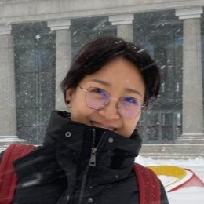
Prof. Wei Bian
Harbin Institute of Technology, China
Title:Sparse Optimization Problems with Cardinality Penalties: Continuous Relaxation Method and Proximal-based Algorithms
Abstract:Cardinality penalties represent a foundational approach for enforcing sparsity in optimization models. In this work, we propose a unified framework of continuous relaxation methods and design different proximal-friendly algorithms to four critical classes of sparse optimization problems with cardinality penalties: 1) element-wise sparse models, 2) group-structured sparse models, 3) rank-regularized models, and 4) sparse minmax models. These problems are inherently challenged by discontinuous objective functions, which complicate both analysis and computation. To bridge this gap, we first develop the exact continuous relaxation models that share the same global solutions as the original problems. A rigorous theoretical analysis is then conducted to characterize the relationships between global solutions, local solutions, and stationary points across all problem classes. Notably, we provide a more rigorous characterization to the global solutions, leading to two key definitions: (i) the strong local solutions for cardinality problems, and (ii) the strong stationary points of the continuous relaxation models, which exhibit a one-to-one correspondence. Next, leveraging this theoretical foundation, we design the proximal-based algorithms for the first three problem classes. These algorithms are provably guaranteed to converge to the strong local solutions, with some convergence rates explicitly analyzed. Some comprehensive numerical experiments further validate the efficiency of the proposed algorithms, demonstrating superior performance in both solution quality and computational scalability compared to baseline methods.
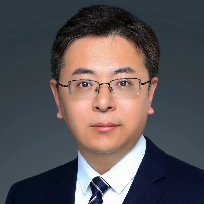
Prof. Chengxun Yuan
Harbin Institute of Technology, China
Biography: Chengxun Yuan, Professor and doctoral supervisor at Harbin Institute of Technology, serves as the Associate Dean of the School of Physics and the Chair of the Department of Applied Physics. His academic affiliations include editorial board member of Physica Scripta (an SCI-indexed journal), senior member of the China Electronics Society, member of the Plasma Branch of the Chinese Physical Society, member of the Radio Wave Propagation Committee of the China Electronics Society, member of the Environmental Modeling and Simulation Committee of the Chinese Society of Systems Simulation, Vice Chairman and Secretary-General of the Heilongjiang Physical Society, and lifetime member of the Chinese Physical Society. His research interests focus on plasma physics and applications, radio wave propagation, and plasma photonic crystals. He has led more than 20 national and provincial-level projects, including topics under the National Key R&D Program, key and general projects funded by the National Natural Science Foundation of China, and key projects under the Heilongjiang Provincial Key R&D Program. He has published over 200 academic papers, among which 180 are indexed by SCI. He has authored one English monograph and two Chinese monographs, contributed to two textbooks, and has delivered more than 40 keynote, invited, and oral presentations at international conferences.
Title: Research on Gas Component Detection Based on Plasma Technology
Abstract: With the continuous development of China’s economy and the increasing demands for the quality of living environments, the need for online analysis of process gases has been steadily rising across various fields, such as industrial process control, atmospheric environment monitoring, exhaust gas diagnostics, and biomedical applications. Consequently, the application scenarios for gas component detection have become more diverse.This study focuses on the design, numerical modeling, and experimental investigation of a micro hollow cathode discharge device, aiming to realize parameter diagnostics and material composition detection based on micro hollow cathode discharge plasma.In terms of numerical modeling, a hybrid model combining electron kinetic descriptions with heavy particle fluid descriptions was developed to simulate plasma parameters and fast electron dynamics in the negative glow region. The model accurately predicted the fast electron energy distribution function characterized by distinctive electron peaks formed through Penning ionization reactions and superelastic collisions. Its reliability was verified via probe diagnostics.Experimentally, a micro hollow cathode discharge device was designed to generate a stable non-local negative glow plasma under atmospheric pressure conditions. By covering the outer surface of the cathode, the current-voltage characteristics of the discharge were enhanced and the negative glow plasma region was expanded, thereby improving the resolution of the fast electron energy spectrum. This enabled the analysis and detection of gas components based on plasma electron energy spectroscopy technology. Additionally, plasma diagnostics including measurements of electron density, electron temperature, and electron energy distribution function were conducted using wall probes.This research deepens the understanding of plasma dynamics and provides a powerful tool for gas phase component analysis in non-equilibrium plasmas.

Prof. Quanxin Zhu
Hunan Normal University, China
Biography: Quanxin Zhu, Ph.D., Second-Level Professor, Xiaoxiang Distinguished Professor at Hunan Normal University, and doctoral supervisor. He is an expert enjoying the special government allowance from the State Council, a leading talent in scientific and technological innovation of Hunan Province, a Distinguished Professor of Hunan Furong Scholars Program, and a senior researcher funded by the Alexander von Humboldt Foundation in Germany. He serves as the Deputy Director of the Key Laboratory of Computational and Stochastic Mathematics of the Ministry of Education, and Director of the Key Laboratory of Control and Optimization of Complex Systems in Universities of Hunan Province. He is a Senior Member of IEEE and a Senior Member of the Chinese Association of Automation. His main research interests focus on Markov processes, stability and control theory of stochastic nonlinear systems, and their applications. He has published over 200 SCI-indexed papers in top international journals in the field of control such as Automatica, IEEE Transactions on Automatic Control, and SIAM Journal on Control and Optimization. He has received numerous honors including the First Prize of Natural Science Award of Hunan Province (as the first principal contributor), First Prize of Natural Science Award for Higher Education Institutions in Jiangsu Province (as the first principal contributor), six consecutive years (2018–2023) as a Highly Cited Researcher globally, listed among the top 0.05% of global scholars in 2024, ranked in the global top 2% of scientists for five consecutive years (2020–2024), eleven consecutive years (2014–2024) as a Highly Cited Researcher in China by Elsevier, the Level 1 “Youth Science and Technology Award” of the Operations Research Society of China, one of China’s top 100 most internationally influential academic papers, and the Jiangsu Provincial Mathematics Achievement Award.He has led six projects funded by the National Natural Science Foundation of China and ten projects at provincial and ministerial levels. He currently serves as an executive director of the Chinese Society of Engineering Probability and Statistics, a council member of the Chinese Society of Probability and Statistics, a member of the Control Theory Committee of the Chinese Association of Automation, a member of the Systems and Control Mathematics Committee of the Chinese Society of Industrial and Applied Mathematics, a member of the Adaptive Dynamic Programming and Reinforcement Learning Committee of the Chinese Association of Automation, a member of the Stochastic Systems and Control Group of the IEEE Technical Committee on Control Theory (TCCT), editor-in-chief of the international journal Complex Systems Stability & Control, and associate editor or editorial board member of six other international SCI journals including IEEE Transactions on Automation Science and Engineering.
Abstract: In this talk, we address the stabilization problem for a class of stochastic nonlinear delay systems driven by Lévy processes. By introducing a novel event-triggered strategy and employing techniques from stochastic analysis, we establish sufficient conditions for the practical pth moment exponential stability of the closed-loop system. Unlike many existing works, our approach does not rely on the global Lipschitz condition or linear matrix inequalities (LMIs). Moreover, in contrast to results focusing either on discrete-time stochastic systems or on continuous-time systems with Brownian motion alone, our study specifically targets the event-triggered sampling control of continuous-time systems subject to both time delays and Lévy noise, which encompasses both diffusion and jump components. This leads to a more general framework with broader applicability.

Nanjing University, China
Biography: Qiang Zhang studied in the Department of Mathematics at Nankai University from 1989 to 1999, completing his bachelor's, master's, and doctoral degrees, and then remained at the university as a faculty member. From 2000 to 2002, he was a postdoctoral researcher at the University of Science and Technology of China. Since 2008, he has been a professor at the School of Mathematics, Nanjing University. He has been engaged in research on numerical methods for partial differential equations, particularly the theoretical analysis and practical applications of fully discrete schemes based on discontinuous finite elements. He has led and participated in multiple projects funded by the National Natural Science Foundation of China and has published over 60 academic papers.
Title: Optimal Error Estimate of Discontinuous Galerkin Method for One-Dimensional Linear Hyperbolic Equations with Degenerate Points Moving Along Space-Time Curves
Abstract: In this talk, we shall consider the optimal error estimate on a semi-discrete discontinuous Galerkin method with purely upwind numerical flux to solve a one-dimensional linear variable-coefficient hyperbolic equation, where the flow speed has different signs when passing through the degenerate points. The purpose of this talk is to present a rigorous proof for a special case that the degenerate points move along smooth curves depending on both space and time variables. To address the analysis difficulties due to the change of the flow speed’s sign regarding time, we propose a novel analysis framework with the help of a time-dependent projection based on the hybrid application of Gauss-Radau projections and a carefully designed time-space subdivision associated with the spatial mesh.

Assoc. Prof. Xiaozhou Li
University of Electronic Science and Technology of China, China
Title: Spectral Symbol Analysis of Space–Time FE–DG Discretizations: Foundations for Parallel-in-Time Solvers
Abstract: In this talk, we study the space–time discretization of the multidimensional heat equation using a discontinuous Galerkin (DG) method in time and finite element (FE) approximations in space. The DG time discretization induces a characteristic block structure in the fully discrete system, motivating a detailed spectral analysis. Within the framework of Generalized Locally Toeplitz (GLT) theory, we show that the resulting space–time matrices admit an asymptotic spectral symbol as the spatial and temporal mesh parameters tend to zero. This symbol compactly captures the interaction between the temporal DG operator and the spatial FE discretization and elucidates key structural properties of the scheme. Numerical experiments confirm the theoretical predictions. The analysis provides structural insight into FE–DG space–time systems and forms a theoretical basis for the future development of advanced solvers, including time-parallel approaches.

Harbin Institute of Technology, China
Biography: Jia Li is an Associate Professor at the School of Mathematics, Harbin Institute of Technology. She has led multiple projects, including the National Natural Science Foundation of China’s Young Scientists Fund and the Heilongjiang Province Outstanding Young Scholar Fund. Her main research areas are high-accuracy numerical methods for partial differential equations and deep learning methods. She has made significant contributions to the optimal error estimation analysis of discontinuous finite element methods, with related papers published in journals such as Mathematics of Computation, SIAM Journal on Numerical Analysis, and Journal of Computational Physics.
Title: Optimal Error Estimates for the Discontinuous Finite Element Method with Generalized Numerical Flux
Abstract: The discontinuous finite element method (DG method) is a high-order accurate numerical approach for solving partial differential equations. Its numerical scheme is characterized by the use of an independent set of polynomial bases on each computational element, allowing the basis functions to be discontinuous across element boundaries. This feature makes the DG method particularly effective for problems with discontinuous solutions. Numerical fluxes are an essential component of the DG method’s numerical scheme. This report studies the DG method employing generalized numerical fluxes. The generalized flux uses information from the numerical solutions on both sides of an element boundary, providing greater flexibility to the numerical scheme. However, this also couples the information across elements in the error analysis, making the use of traditional analytical tools insufficient to prove error estimates. By constructing a special global projection, this work ultimately establishes the optimal error estimate properties of the discontinuous finite element method with generalized numerical flux.
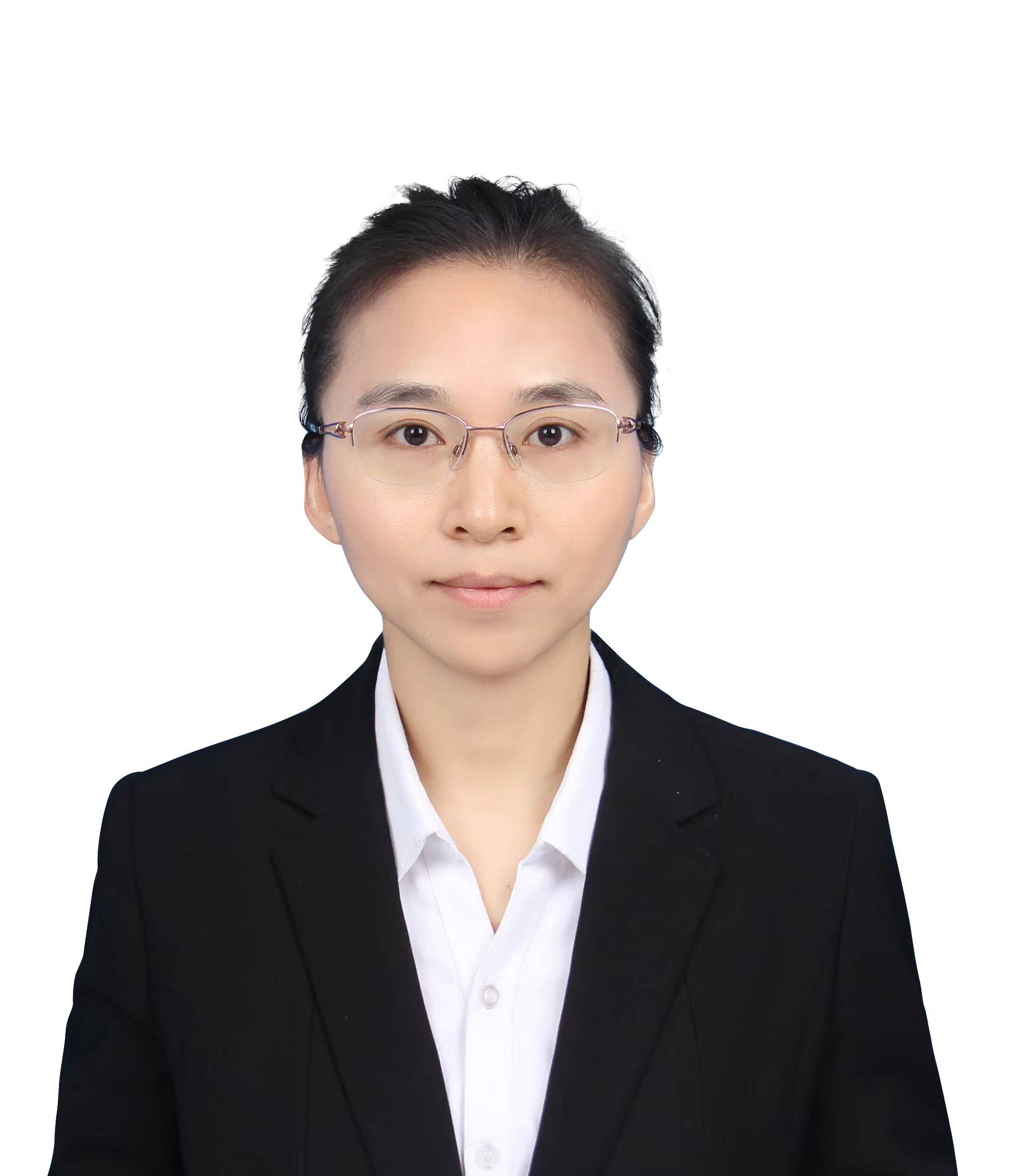
Dr. Fengyu Fu
Harbin University of Science and Technology, China
Biography: Fengyu Fu, Ph.D., is a lecturer in the Department of Mathematics at Harbin University of Science and Technology. He obtained his Doctor of Science degree from Harbin Institute of Technology in 2024 and participated in a one-year joint training program at the Department of Applied Mathematics, Brown University, USA, from 2019 to 2020. Since August 2024, he has been teaching in the Department of Mathematics at the School of Science, Harbin University of Science and Technology. His main research focuses on high-accuracy numerical methods, with an emphasis on the design and theoretical analysis of discontinuous finite element methods.
Title: Analysis of the Boundary Conditions for the Ultralweak-Local Discontinuous Galerkin Method of Time-Dependent Linear Fourth-Order Problems
Abstract: In this talk, we consider the ultraweak-local discontinuous Galerkin (UWLDG) method for time-dependent linear fourth-order problems with four types of boundary conditions. objective is to present the design philosophy behind the numerical fluxes for the UWLDG scheme using polynomials of degree at most k to solve initial-boundary value problems. The key challenges lie in designing appropriate penalty terms at the boundary for the numerical fluxes and constructing suitable projections. Specifically, in two dimensions with Dirichlet boundary conditions, we propose a carefully constructed projection of the exact boundary condition as the boundary flux. Combined with properly chosen penalty terms, this ensures both stability and optimal error estimates. For the other three types of boundary conditions, optimal error estimates can also be achieved without penalty terms, provided that special projections are tailored to match the respective boundary conditions. Numerical experiments are presented to validate the sharpness of the theoretical results.